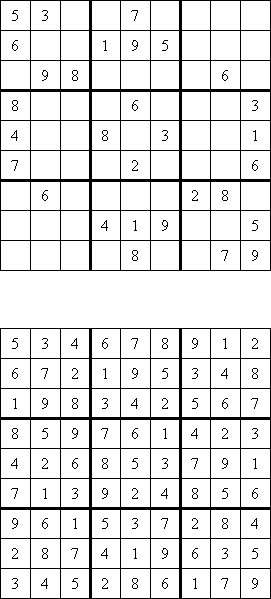
Sudoku (also known as "Number Place") is a placement puzzle. The puzzle is most frequently a 9 x 9 grid made up of 3 x 3 subgrids (called "regions"). Some cells already contain numbers, known as "givens". The goal is to fill in the empty cells, one number in each, so that each column, row, and region contains the numbers 1 through 9 exactly once. Each number in the solution therefore occurs only once in each of three "directions", hence the "single numbers" implied by the puzzle's name.
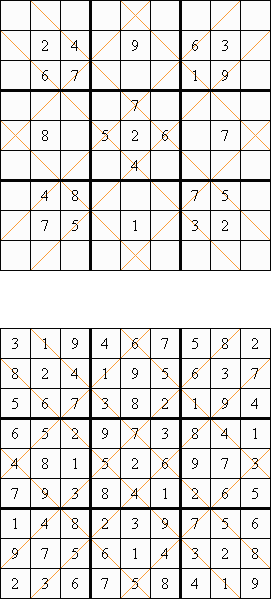
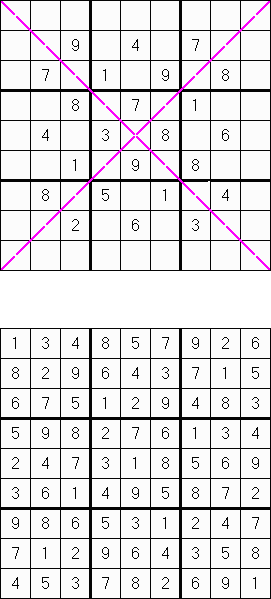
In some sudokus main diagonals also contain the digits 1 through 9. This variant is called Sudoku X ("Diagonal Sudoku" or "Kokonotsu"). Use the check box Diagonals for such sudokus.
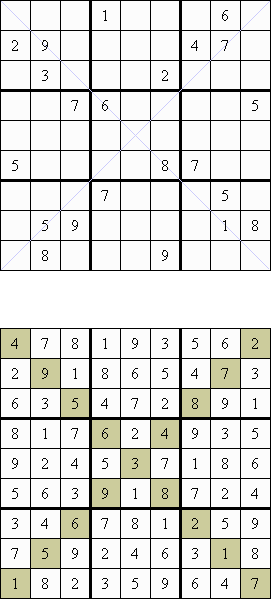
Argyle Sudoku contains additional diagonals; every marked diagonal line contains each digit not more than once. The argyle pattern is derived from the tartan of Clan Campbell, in eastern Scotland.
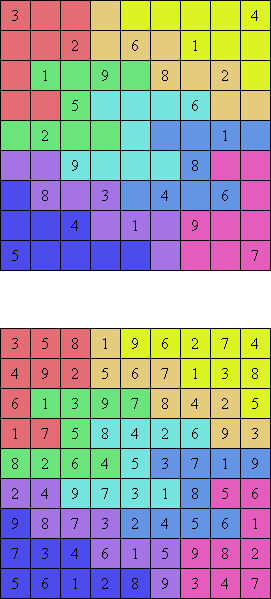
Also the puzzle may contain the regions of random (irregular) shape; this variant is called Jigsaw Sudoku ("Geometry Sudoku", "Geometry Number Place", "Irregular Sudoku", "Kikagaku Nanpure"):
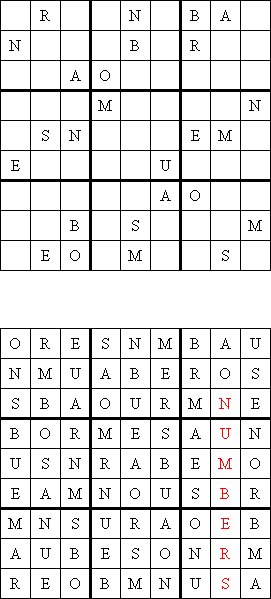
Godoku (also known as "Wordoku") is similar to sudoku, but uses letters instead of numbers. Once the grid is complete, the hidden word may be revealed.
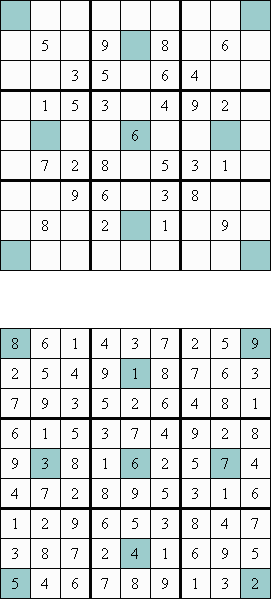
In Asterisk Sudoku there is an additional area, shown on the grid by shading nine specially selected cells. Those nine cells must also contain 1 to 9.
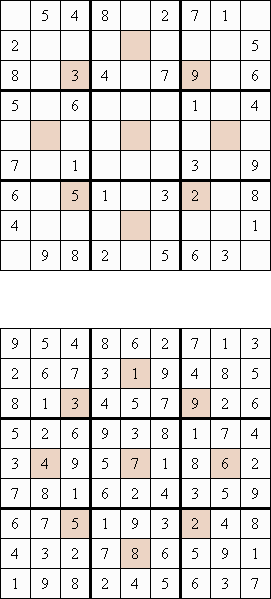
Girandola is an ordinary sudoku with one extra group of cells. This group must also contain digits 1 through 9. (Girandola is a kind of revolving firework.)
Center Dot is a variant of sudoku, where central cells of each region form an extra region. This region must contain digits 1 through 9.
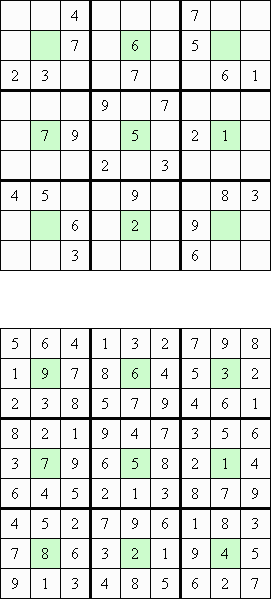
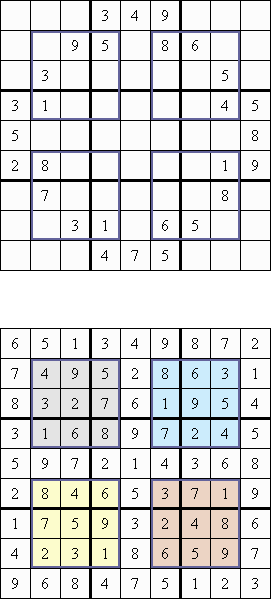
Sudoku may contain additional four regions 3 x 3. This format was first introduced in the Dutch newspaper "NRC Handelsblad" by Peter Ritmeester. It is called Windoku ("Four-Box Sudoku", "Hyper Sudoku").
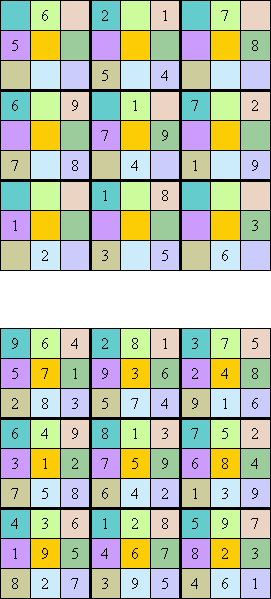
Sudoku-DG (also known as "Offset Sudoku") contains 9 disjoint groups in the puzzle, one for each relative box position. Each group has a distinct color. The group of 9 cells with the same color must also contain digits 1 through 9.
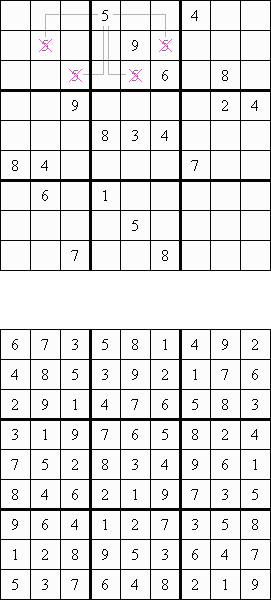
In Anti-Knight Sudoku all cells at a chess knight move (at a distance of 2 by 1) must hold different numbers.
In Anti-King Sudoku ("Touchless Sudoku") equal digits can be neither orthogonally nor diagonally adjacent.
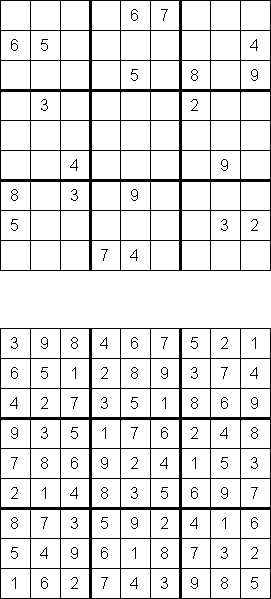
In Anti Diagonal Sudoku each diagonal has at most three different digits.
Task files have the extension *.SDK.